Thursday, October 20, 2011

Nokia to unveil Windows phone next week: Microsoft

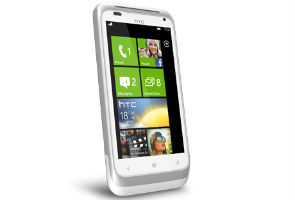
Microsoft said Thursday that Nokia is going to launch phones using Windows' new mobile operating system next week, giving a major boost to the US firm's come-from-behind phone software business.

Windows Phone division chief Andy Lees said the Nokia devices were a huge development for Microsoft as it struggles to capture a piece of the market for mobile operating systems already dominated by Apple, Google and BlackBerry.

"We are very excited about them (Nokia) being in the market," he told the All Things Digital AsiaD technology conference in Hong Kong.

"They have a lot of resources throughout the world and they will be a major accelerant to us."

Lees said the Finland-based maker of mobile phones saw Microsoft's "road map" for its new operating system and "decided to bet their whole company on Windows Phone based on that".

He said Google, maker of the popular Android operating system for mobile phones, was "very nervous" at Microsoft's entry into the market, even though Windows Phone has a long way to go before it rivals more established products.

"We've been working hard on building an architecture that allows us to leapfrog our competitors by using the best components available," Lees said in reference to its hardware partners such as Nokia and Samsung.

Microsoft and Samsung last month announced they would cooperate in the development and marketing of Windows Phone.

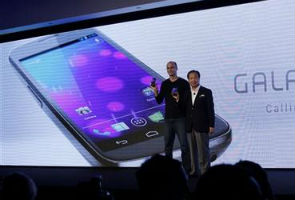
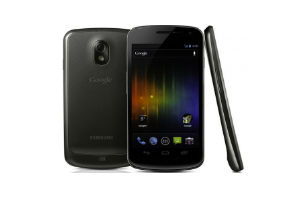
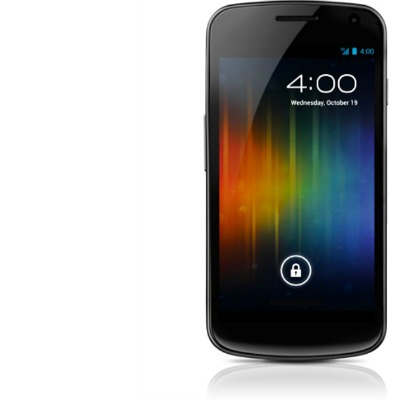
Samsung and Google unveil Galaxy Nexus smartphone

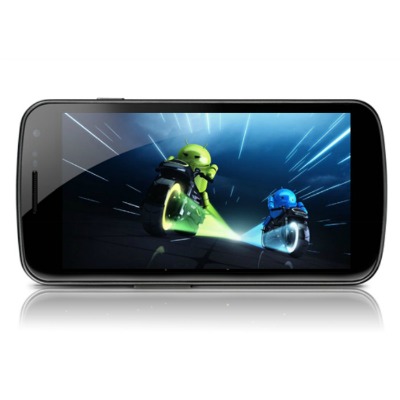
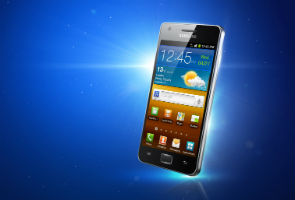
Samsung Electronics unveiled its newest Galaxy Nexus smartphone Wednesday, the first to use the latest version of Google's Android operating system.

The new phone is seen as the Samsung-Google partnership's answer to Apple's iPhone 4S, which in less than a week on the market has already sold more than 4 million units.

At a glitzy unveiling in Hong Kong, Google executive Andy Rubin said Android's latest "Ice Cream Sandwich" operating system demonstrates innovation "that works on phones and tablets and everything in between."

Rubin said features like Android Beam and Face Unlock showcased Ice Cream Sandwich's capabilities.

Android Beam allows transfer of data between two smartphones by holding them together, while Face Unlock uses facial recognition technology to activate smartphones, rather than conventional passwords.

However, during a demonstration at the Hong Kong unveiling, the Face Unlock feature failed to activate the Galaxy Nexus.

Executives of South Korea's Samsung said the Galaxy Nexus will go on sale in November in the U.S., Europe and Asia, including China and Japan. They did not reveal the new smartphone's price or its sales volume targets.

Samsung and Taiwan's HTC Corp. are the biggest users of the Android platform, which is engaged in a furious competition with Apple's own operating system for market share in the rapidly expanding smartphone sector.

The U.S. International Trade Commission issued an initial ruling Tuesday that Apple's iPhone does not violate four patents owned by HTC, a blow to the Taiwanese company.

On Monday, Samsung asked Japanese and Australian courts to block sales of Apple's new iPhone 4S in those countries over alleged patent violations. The actions are part of an intensifying patent battle between the smartphone giants.

Samsung is also appealing an Australian court's decision last week to temporarily ban sales of Samsung's new Galaxy tablet computer. Apple accused Samsung of copying the iPad and iPhone and violating Apple's patents.

Samsung announces lce Cream Sandwich phone

Samsung has announced the Galaxy Nexus, which will become the first device to run the latest version of the Google's Android OS, Ice Cream Sandwich (ICS).

The device will come with a large 4.65 Inch Super AMOLED display, which will boast of HD resolution of 1280x720, reproducing 316 pixels per inch.

Besides this the device will come equipped with a curved teardrop design, a button less front, a 1.2 GHz TIOMAP processor, 1GB of RAM, a 5 megapixel camera with 1080p video capabilities, 1.3 megapixel front facing camera and LTE versions for supported markets.

While the hardware itself is impressive, the Galaxy Nexus is Google's Ice Cream Sandwich flagship phone, which will make for a pure Google experience.


Ice Cream Sandwich brings numerous enhancements to the table, such as a unified interface for both tablets and smartphones, enhanced multitasking, a new font called Roboto, facial unlock capabilities, a new lock screen, zero shutter lag for cameras, enhanced voice dictation, a new NFC sharing mechanism called Android Beam, enhanced Android Browser with tabbed browsing, folder support, enhanced text input with improvements in the virtual keyboard and cut, copy and paste functionalities and improved Email features.
Samsung, for the moment, has only announced that the device will launch in Japan on the DOCOMO network in November, so there are no details regarding international availability and price. The device will be available in 32 GB and 16 GB models. 


RIM unveils next generation BlackBerry BBX platform

Research In Motion (RIM) on Tuesday set out to rev up its BlackBerry and PlayBook lines with a tactic from Apple's winning playbook -- sexy, entertaining software applications.

Co-chief executive Mike Lazaridis opened a major RIM developers conference here with a humble acknowledgement that the company stumbled with a recent BlackBerry service outage and quickly shifted to talk of an upbeat future.

"The worldwide outages we experienced were unfortunate," Lazaridis said during an opening presentation at the BlackBerry DevCon Americas gathering.

"We restored full service as quickly as we could," he said. "Now, we are focused on making things right for our more than 70 million BlackBerry users."

Lazaridis then unveiled a next-generation BlackBerry BBX platform designed to let developers build rich, quick applications to run on RIM smartphones and its PlayBook tablet computers.
RIM has sold 165 million BlackBerry smartphones and more than a billion applications have been downloaded from RIM's online App World, according to Lazaridis.

The launch of the new BlackBerry 7 line of handsets was touted as the best in the company's history.

Lazaridis said that BBX, named in tribute to its combination of BlackBerry and QNX Software Systems technology, provides a powerful new platform for developers for programs focus on anything from work to games.

"BBX is a single unified platform for the entire world -- phones, tablets, and millions of inventive devices we use every day of our lives," said QNX chief executive Dan Dodge.

"You get reliability and security; our architecture is safe by design."

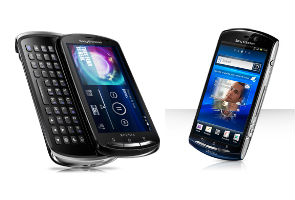
Sony Ericsson launches the Xperia Neo V and the Xperia Pro

Sony Ericsson has announced two new smartphones in the Xperia range - the Pro and the Neo V running on the latest Android Gingerbread OS.

The Xperia Neo V will come equipped with a 1GHz Snapdragon processor, a Reality Display powered by the mobile Bravia Engine and new 3D Sweep Panorama made for the in-built 5 megapixel camera.

The Xperia Pro will feature a slide out QWERTY keypad, 1GHz processor, 8.1 megapixel camera with EXMOR-R technology and a 3D Sweep Panorama mode, alongside a Reality Display equipped with the mobile Bravia Engine.

Sony Ericsson will also collaborate with Bharti Airtel to provide 500 MB of 3G/2G data free per month, for the first three months from the date of purchase.

The Xperia Neo V is already available in the market for Rs.17,500 and the Xperia Pro will be available next week for a price tag between Rs.22-23,000. 

Wednesday, October 12, 2011

HTC unveils the HTC Radar in India

The HTC Radar will be available in a week's time for Rs. 25,490. The device will come preloaded with Microsoft's latest mobile operating system - Windows Phone 7.5 Mango. It has a 3.5-inch WVGA SLCD display with a resolution of 480x800 pixels. Under the hood, the device runs on a 1GHz Qualcomm Snapdragon processor and 512MB of RAM. It comes with 8GB internal storage expandable up to 32GB via MicroSD card. A VGA front facing camera is present for video conferencing and the rear houses a 5MP camera with the ability to do 720p HD recording. A 1520mAh battery powers the device.

Facebook app hits the iPad

Facebook on Monday landed on the iPad, releasing software that lets members of the leading online social network connect on Apple's hot-selling tablet computers.

The release of an iPad application is part of a move by Facebook to stay in synch with modern lifestyles that revolve increasingly around Internet-linked wireless mobile gadgets.

"Many of you have been asking about Facebook for iPad," Facebook mobile engineer Leon Dubinsky said in a blog post. "It's finally here."

Features added to the Facebook iPad software include being able to chat with friends or watch high-resolution streaming video, according to the engineer.

Facebook also upgraded its iPhone application to allow faster online searches, simpler navigation of pages, and access to more games and other socially-oriented mini-programs, Dubinsky said.
Approximately 800 million people belong to the Palo Alto, California-based social network.

iPhone 4S pre-orders top 1 million in 24 hours

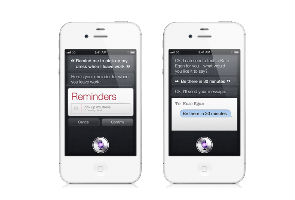
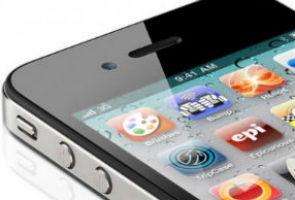
Apple says first-day pre-orders of the iPhone 4S topped 1 million, breaking the record set by last year's model.

Apple Inc. and various phone companies started taking orders for the phone last Friday. It hits stores this Friday.

First-day orders for the iPhone 4 were 600,000 when it launched last year. It was then sold in the U.S. only by AT&T Inc. The iPhone 4S is also sold by Verizon Wireless and Sprint Nextel Corporation.

The base model of the iPhone 4S costs $200 with a two-year contract. It has a faster processor and an improved camera compared to last year's model.

Apple shares rose $9, or 2.4 percent, to $378.80 in premarket trading Monday.

Samsung: Android phone launch delayed for Jobs'

South Korea's Samsung Electronics said on Monday that it delayed the launch of a smartphone based on Google's latest Android operating system as a gesture of respect for legendary Apple co-founder Steve Jobs.

Samsung -- the world's number two mobile phone maker -- and Apple are at loggerheads in a series of patent lawsuits over the technology and design of smartphones and tablet computers.

The Korean company had been due to unveil a Galaxy Nexus smartphone using Google-backed Android software and designed to challenge Apple's market-leading iPhone at an event in San Diego on Tuesday.

"The launch was delayed because we thought it's not the right time to announce it following the passing of Steve Jobs," a spokesman for the company told AFP.

Jobs, 56, died on Wednesday after suffering from cancer.

Last week Apple unveiled its iPhone 4S, which will be available in the US, Australia, Canada, France, Germany, Japan and Britain on October 14 and in another 22 countries including Italy from October 28.

But Samsung said it would seek a ban in France and Italy on sales of the new iPhone, citing what it called two patent infringements regarding mobile technology.

The South Korean firm also said it would file preliminary injunctions in other countries.

Samsung will announce a new date and venue for its smartphone launch later.

BlackBerry services suffer massive outage in India

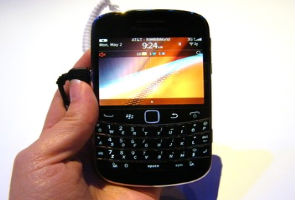
Scores of BlackBerry subscribers today faced disruption in accessing Internet and using messenger services, even as the smartphone manufacturer, Research In Motion, assured its customers of resolving the glitch soon.
    
India is estimated to have one million users of BlackBerry.
    
"We are working to resolve an issue currently impacting some BlackBerry subscribers in Europe, the Middle East and Africa and India. We're investigating, and we apologise to our customers for any inconvenience caused whilst this is resolved," Canada-based RIM said in a statement.
    
Telecom operators in India maintained that there was no problem at their end. Glitches in BlackBerry services were reported from different parts of the world.

 "Millions of BlackBerry smartphone users have been cut off by a major fault at RIM, the Canadian company that makes the devices," UK's Daily Telegraph said in a report.

Vodafone UK said that customers across Britain appeared to be unable to access BlackBerry Messenger, a free-to-use instant messaging program which has helped make the handset popular with young people.
    
"The glitch was affecting online services for consumers all over Europe, the Middle East and Africa. All are served by a RIM data centre in Slough," it added.

Khaled Hegazy, Vodafone Egypt's spokesman, said "there is a problem with the servers in Canada which is affecting service" in the region. He said they expected it would take about another four hours to resolve the issue, which first appeared to crop up at about 1000 GMT.    

The outage occurred as RIM's co-CEO Jim Balsillie and other executives were in Dubai for the annual GITEX electronics show. Balsillie earlier in the day unveiled a new service at the show that will soon let users of some of its latest BlackBerry phones share documents, web links and other information with others by tapping their smartphones together.

Hundreds of users flooded microblogging site Twitter, complaining about disruptions in BlackBerry services.

S. Korea's LG unveils ultra-high-speed smartphone

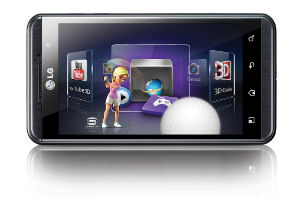
South Korea's LG Electronics on Monday launched a new smartphone with ultra-high-speed network technology in a bid to catch up with rivals Apple and Samsung.

LG, the world's third-largest handset maker, said its Optimus LTE smartphone based on 4G wireless technology offers photos and videos with "true natural colours" that are easier on the eye than other smartphones.

The 4G wireless service, based on Long-Term Evolution (LTE) technology, promises fast data traffic and quicker access to applications such as television programmes, movies and video streaming.

Samsung Electronics, LG's bigger rival and the world's number two handset maker, last month introduced a new version of its popular Galaxy S II smartphone based on the technology.

"Since mobile devices are widely expected to become the main platform for media consumption in the LTE era, high-resolution displays on smartphones will be even more necessary," Park Jong-Seok, chief of LG Electronics' mobile unit, said in a statement.

The firm is battling to turn around its loss-making handset operations, where it lags Samsung Electronics and Apple in offering high-margin smartphones packed with special features.

The company replaced its chief executive last year after its mobile unit posted a record loss in the second quarter of 2010 due to a falling share of the booming global smartphone market.

Analysts cautiously expressed optimism, saying LG, after a year-long struggle, is set for continued profit growth based on increased sale of smartphones and ample patents it owns in the new high-speed technologies.

Tuesday, September 27, 2011

Samsung starts new chip line to boost flash memory

Samsung Electronics, the world's largest memory chip maker, said Thursday it has begun mass production at a new line to raise production of flash memory chips used in tablets and smartphones.

The South Korean firm also announced it has started mass production of advanced DRAM (dynamic random access memory) chips, which use 20-nanometer process technology.

It said in a statement these offer significant improvements in productivity and cut energy consumption.

The flash memory chip market is robust thanks to growing demand for mobile devices such as tablet computers and smartphones.

But demand is weak for DRAM chips used in personal computers, pushing prices down and giving makers an incentive to adopt more advanced technology.

"The global semiconductor industry is in a period of fierce cyclical volatility," said chairman Lee Kun-Hee in a ceremony at the new plant at Hwaseong south of Seoul.

"We must prepare for an intensifying storm in the semiconductor industry by further enhancing our technological capabilities and expertise in order to maintain our leadership position."

Samsung said it has invested 12 trillion won ($10.4 billion) in building the new plant since work started in May last year.

Samsung had a market share of 41.6 percent in the global DRAM market in the second quarter, according to research firm IHS iSuppli.

Its share of the world market for NAND flash chips was also 41.6 per cent in the second quarter, ahead of Toshiba's 28.7 percent.

The company said it would raise production of NAND flash chips to meet growing demand, and would begin production of more advanced flash chips using 10-nanometer process technology next year.

"The latest technology migration by Samsung means a wider technology gap with its rivals in Taiwan and they may even exit the market sometime early next year," Kiwoom Securities analyst Lee Jae-Yun told Dow Jones Newswires.

"Demand for NAND chips will remain healthy due to brisk sales of smartphones and tablets, while supply has significantly shrunk due to production cuts by some chipmakers."

Next iPhone to be unveiled on October 4th?

Apple's CEO Tim Cook might unveil the iPhone 5 on October 4, reports All Things Digital. Rumour mills have been hard at work these past few months suggesting the launch of the device towards the end of 2011.

As has been the tradition with all Apple products, the iPhone 5 is expected to hit store shelves shortly after its announcement.

As Jobs' former right hand man and current CEO of the company, Tim Cook is expected to play a significant role in the announcement of the device.

What remains to be seen is whether Steve Jobs himself will be present at the announcement. During his indefinite medical leave, Jobs still found the time to come on stage to unveil the iPad 2.

HTC unveils new smartphone, the Rhyme

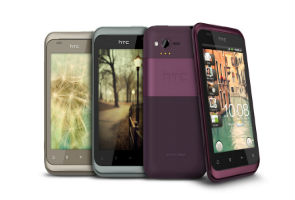
Taiwan's HTC unveiled a smartphone called the Rhyme on Tuesday which features a blinking "charm" that attaches to a bag to let a user know if they have received a call or a message.

The Android-powered Rhyme will go on sale in the United States on September 29. It will cost $199 and will be available through Verizon Wireless.

The Rhyme, which runs the latest version of Google's Android software known as Gingerbread, will go on sale in Europe and Asia in October.

Taiwan's leading smartphone maker stressed the "style" and accessories for the plum-colored device at a launch event in Manhattan on Tuesday.

"Like your glasses, your wallet, your belt or that special bag, the smartphone or the phone expresses who you are as an individual," said HTC's vice president of design, Scott Croyle.

"You want a phone that's handcrafted with style, you want it to be intuitive, you want it to be less than a device and more of a companion," Croyle said.

The Rhyme comes with a tethered accessory called a "charm" that blinks when a user receives a message or a call. "It's more respectful than a ring and more noticeable than vibrate," HTC said.

Tuesday, September 6, 2011

Many US schools adding iPads, trimming textbooks

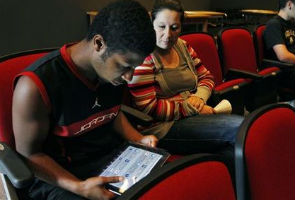
For incoming freshmen at western Connecticut's suburban Brookfield High School, hefting a backpack weighed down with textbooks is about to give way to tapping out notes and flipping electronic pages on a glossy iPad tablet computer.

A few hours away, every student at Burlington High School near Boston will also start the year with new school-issued iPads, each loaded with electronic textbooks and other online resources in place of traditional bulky texts.

While iPads have rocketed to popularity on many college campuses since Apple Inc. introduced the device in spring 2010, many public secondary schools this fall will move away from textbooks in favor of the lightweight tablet computers.

Apple officials say they know of more than 600 districts that have launched what are called "one-to-one" programs, in which at least one classroom of students is getting iPads for each student to use throughout the school day.

Nearly two-thirds of them have begun since July, according to Apple.

New programs are being announced on a regular basis, too. As recently as Wednesday, Kentucky's education commissioner and the superintendent of schools in Woodford County, Ky., said that Woodford County High will become the state's first public high school to give each of its 1,250 students an iPad.

At Burlington High in suburban Boston, principal Patrick Larkin calls the $500 iPads a better long-term investment than textbooks, though he said the school will still use traditional texts in some courses if suitable electronic programs aren't yet available.

"I don't want to generalize because I don't want to insult people who are working hard to make those resources," Larkin said of textbooks, "but they're pretty much outdated the minute they're printed and certainly by the time they're delivered. The bottom line is that the iPads will give our kids a chance to use much more relevant materials."

The trend has not been limited to wealthy suburban districts. New York City, Chicago and many other urban districts also are buying large numbers of iPads.

The iPads generally cost districts between $500 and $600, depending on what accessories and service plans are purchased.

By comparison, Brookfield High in Connecticut estimates it spends at least that much yearly on every student's textbooks, not including graphing calculators, dictionaries and other accessories they can get on the iPads.

Educators say the sleek, flat tablet computers offer a variety of benefits.

They include interactive programs to demonstrate problem-solving in math, scratchpad features for note-taking and bookmarking, the ability to immediately send quizzes and homework to teachers, and the chance to view videos or tutorials on everything from important historical events to learning foreign languages.

They're especially popular in special education services, for children with autism spectrum disorders and learning disabilities, and for those who learn best when something is explained with visual images, not just through talking.

Some advocates also say the interactive nature of learning on an iPad comes naturally to many of today's students, who've grown up with electronic devices as part of their everyday world.

But for all of the excitement surrounding the growth of iPads in public secondary schools, some experts watching the trend warn that the districts need to ensure they can support the wireless infrastructure, repairs and other costs that accompany a switch to such a tech-heavy approach.

And even with the most modern device in hand, students still need the basics of a solid curriculum and skilled teachers.

"There's a saying that the music is not in the piano and, in the same way, the learning is not in the device," said Mark Warschauer, an education and informatics professor at the University of California-Irvine whose specialties include research on the intersection of technology and education.

"I don't want to oversell these things or present the idea that these devices are miraculous, but they have some benefits and that's why so many people outside of schools are using them so much," he said.

One such iPad devotee is 15-year-old Christian Woods, who starts his sophomore year at Burlington, Mass., High School on a special student support team to help about 1,000 other teens adjust to their new tablets.

"I think people will like it. I really don't know anybody in high school that wouldn't want to get an iPad," he said. "We're always using technology at home, then when you're at school it's textbooks, so it's a good way to put all of that together."

Districts are varied in their policies on how they police students' use.

Many have filtering programs to keep students off websites that have not been pre-approved, and some require the students to turn in the iPads during vacation breaks and at the end of the school year. Others hold the reins a little more loosely.

"If we truly consider this a learning device, we don't want to take it away and say, `Leaning stops in the summertime.' " said Larkin, the Burlington principal.

And the nation's domestic textbook publishing industry, accounting for $5.5 billion in yearly sales to secondary schools, is taking notice of the trend with its own shift in a competitive race toward developing curriculum specifically for iPads.

At Boston-based Houghton Mifflin Harcourt, for instance, programmers scrambled to create an iPad-specific secondary school program starting almost as soon as Apple unveiled the tablet in spring 2010.

The publisher's HMH Fuse algebra program, which became available at the start of the 2010 school year, was among the first and is a top seller to districts. Another algebra program and a geometry offering are coming out now.

The HMH Fuse online app is free and gives users an idea of how it works, and the content can be downloaded for $60. By comparison, the publisher's 950-page algebra text on which it was based is almost $73 per copy, and doesn't include the graphing calculators, interactive videos and other features.

For a school that would buy 300 of the textbooks for its freshman class, for instance, the savings from using the online version would be almost $4,000.

Jay Diskey, executive director of the Association of American Publishers' schools division, said all of the major textbook publishers are moving toward electronic offerings, but at least in the short term, traditional bound textbooks are here to stay.

"I think one of the real key questions that will be answered over the next several years is what sort of things work best in print for students and what sort of things work best digitally," Diskey said. "I think we're on the cusp of a whole new area of research and comprehension about what digital learning means."

Sony to release tablet computer this month

Sony's first tablet computer will hit the Japanese market on September 17 as the company looks to take on Apple's popular iPad, the electronics giant said on Thursday.

The Sony Tablet will be powered by Google's Android software, allowing users to download content such as books, movies and games.

The Sony Tablet "S" series with a 9.4-inch (23.8 centimetre) touchscreen display is expected to have a price tag of 45,000 yen ($580) for a 16-gigabyte data storage model and 53,000 yen for the 32-gigabyte version.

The product will also become available in US and European markets later this month, with a price tag of $499 and 479 euros for the 16-gigabyte model.

Competitors have rushed to cash in on soaring demand for tablets since the iPad was released in April last year, but Sony's devices will arrive well behind those of its rivals.

The devices will have access to Sony's cloud of online content such as movies, music, digital books, PlayStation games and other entertainment.

Sony has focused more on pushing its content such as games and music through hardware platforms including game consoles, smartphones and tablet computers.

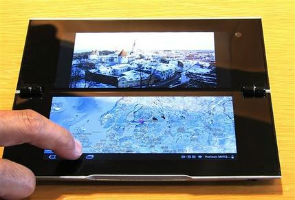
It will release the dual-screened "P" series with a folding design, incorporating two 5.5-inch screens in Japan between October and November. The series will be launched in November in Europe and sometime later this year in the United States.

"Sony aims to grab the No. 1 share of the growing Android-based tablet market (in Japan) in fiscal 2012 (ending March 2013)," Kyodo News quoted Akihiro Matsubara, corporate vice president of Sony Marketing Inc, as saying.

Sony shares rose 1.98 percent to 1,698 yen in Tokyo trade on Thursday.

ew iPhone avatar lost in a bar: CNET

Technology news website CNET on Wednesday reported that a new version of Apple's coveted iPhone went astray in a bar in a replay of an embarrassing loss that took place last year.

An Apple employee lost a yet-to-be released iPhone model in a tequila bar in the San Francisco Mission District in July, according to CNET.

Apple electronically tracked the device to a San Francisco home but the resident denied knowing anything about the missing iPhone, which may have been sold for a couple of hundred dollars at online auction house eBay, CNET said.

The report prompted speculation whether the missing iPhone was a next-generation expected to be unveiled by Apple in September or October.

Word of another unreleased iPhone model disappearing in a bar came just weeks after prosecutors decided not to pursue criminal charges against Gizmodo technology bloggers who got hold of a lost iPhone 4 prototype last year.

Criminal charges were filed against a man who purportedly found the iPhone 4 prototype in a bar and another who brokered a deal to sell it to Gizmodo, according to the district attorney's office in San Mateo County, California.

Early last year, Gizmodo published pictures and details of the iPhone prototype after buying it for $5,000 from a man who claimed to have found it in a beer garden where it was lost by an Apple software engineer.

Sony tablets aim to stand out from the crowd

Sony Corp. on Wednesday revealed its first two tablet computers, with some features that aim to set them apart from the herd of iPad competitors.

The Tablet S, which is about the size of an iPad, can double as a universal remote control. The tablet is wedge-shaped, with one side thicker than the other. The shape mimics that of a magazine that's been folded over.

The Tablet P is small enough to fit in a purse and opens like a book to reveal two screens. When used for e-book reading, it can be held vertically and show one page on each screen. When composing email, the upper screen can show the message while the lower one shows a keyboard.

The Tablet P will be compatible with AT&T's cellular broadband network. It will go sale later this year at a price yet to be determined.

Sony said the Tablet S is going on sale immediately for $499 or $599, depending on how much memory is included.

The tablets tie into other Sony properties. For instance, they will be able to run games created for the original PlayStation and the PlayStation Portable. They'll also have apps that connect to Sony's Music Unlimited and Video Unlimited content stores, formerly known as Qriocity.

Other electronics companies are trying to differentiate their tablets from the iPad as well. On Tuesday, Lenovo Corp. launched a "business-oriented" tablet that comes with a stylus.

HP plans one last production run for the TouchPad

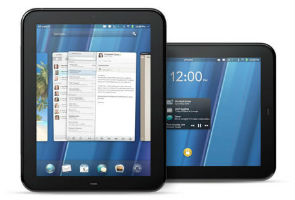
Hewlett-Packard said on Tuesday that it plans one last production run of the TouchPad, which has become a hot seller following a price cut and the announcement the company was killing the tablet computer.

Citing disappointing sales, HP, the world's largest personal computer maker, announced on August 18 that it was ending production of the TouchPad, its rival to Apple's iPad, after just seven weeks on the market.

HP also said it was halting production of phones based on the webOS mobile operating system acquired from Palm last year for $1.2 billion.

The Palo Alto, California-based HP also announced that it was cutting the price of the most basic model of the TouchPad from $399 to just $99.

The tablet computer has been flying off the shelves ever since.

"Since we announced the price drop, the number of inquiries about the product and the speed at which it disappeared from inventory has been stunning," HP said in a blog post on Tuesday.

"Despite announcing an end to manufacturing webOS hardware, we have decided to produce one last run of TouchPads to meet unfulfilled demand," HP said.

"We don't know exactly when these units will be available or how many we'll get, and we can't promise we'll have enough for everyone," HP said. "We do know that it will be at least a few weeks before you can purchase."

HP also announced on August 18 that it was exploring a spinoff of its PC unit in a historic shift away from the consumer market.

Android smartphones gain more ground in US

Google's Android software strengthened its grip on the US smartphone market, powering nearly 42 percent of handsets as of July, industry tracker comScore reported on Tuesday.

Android's share of the US smartphone market grew to 41.8 percent from 36.4 percent at the start of April, according to comScore.

In that same three-month period, Apple's share of the market rose slightly to 27 percent while BlackBerry maker Research In Motion saw its ranks of subscribers erode four percent to 21.7 percent, comScore reported.

The portion of the market using smartphones powered by Microsoft software shrank to 5.7 percent from 6.7 percent and Symbian's share dipped to 1.9 percent from 2.3 percent.

The number of US smartphone owners climbed 10 percent to 82.2 million in the three months ending in July, while the overall number of mobile phone users was 234 million, according to comScore.

Samsung was the most popular handset maker with 25.5 percent of the market and LG second with 20.9 percent, comScore reported.

Apple's beloved iPhones were the fourth most prevalent handsets and accounted for 9.5 percent of the overall US market, according to the industry tracker.