Wednesday, May 18, 2011

Will Apple Launch A New Product For 10 year retail anniversary?

Apple might be planning a new product launch for their tenth retail anniversary on the May 19, according to a report by Boy Genius Reporter (BGR).

BGR cites sources and says that Apple has planned overnight shifts for employees in Apple Stores across the USA on the weekend of the anniversary. Additionally employees will need to lock their cell phones in the main office and will have to sign a Non-Disclosure agreement with the company.

The event is expected to be of very high importance, as the overnight shift will include personnel from the visuals staff, a manager, a business team member, a few Genius team members, one back-of-house employee, and a few generic Apple specialists.

BGR also reports that the stores have already received the hardware for installation and will receive more hardware on the May 20 and 21. As with standard Apple procedure the whole event is shrouded in great secrecy and all products are under lock and key at-least till the May 21.

All Apple stores will be covered with black curtains and the employees will receive special training for the anniversary, which will also happen on Saturday only.

All these signs indicate a new Apple product launch. Apple stores are notorious for high secrecy levels whenever there is a new product launch in store. Previously Apple stores were covered with black curtains when the original iPad was about to launch.

Monday, May 16, 2011

Apple, Google to attend hearing on mobile privacy

US lawmakers have invited Apple, Facebook and Google to attend a hearing on mobile phones and privacy on Thursday -- the second Capitol Hill appearance in a week for executives from Apple and Google.

Senator Jay Rockefeller said the hearing of the Senate Consumer Protection, Product Safety and Insurance Subcommittee would focus on "industry practices with respect to online mobile data collection and usage."

"The hearing will also explore the possible role of the federal government in protecting consumers in the mobile marketplace and promoting their privacy," the Democrat from West Virginia said.

Among those listed as witnesses are Catherine Novelli, Apple's vice president for worldwide government affairs, Bret Taylor, Facebook's chief technology officer, and Alan Davidson, Google's director of public policy for the Americas.

Davidson appeared before the Senate Judiciary Subcommittee on Privacy, Technology and the Law on May 10 along with an Apple executive, Bud Tribble, vice president for software technology at the California gadget-maker.
[ For complete coverage of politics and policy, go to Yahoo! Politics ]

During that hearing, Senator Patrick Leahy expressed "deep concern" about reports that Apple iPhones and Google's Android phones were "collecting, storing, and tracking user location data without the user's consent."

Davidson and Tribble both said their respective companies were committed to privacy protection and were not tracking their users.

Tribble said popular location-based services on mobile devices such as the iPhone and iPad do require some data collection, however, and users are able to opt out if they wish with easy-to-use tools.

Davidson stressed that "location-sharing on Android devices is strictly opt-in for our users, with clear notice and control."

RIM recalls 1,000 PlayBook tablet computers

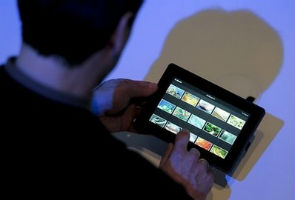
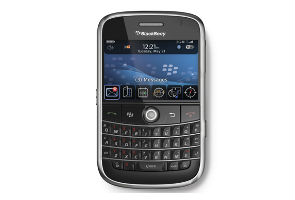
BlackBerry smartphone maker Research In Motion Ltd. has recalled about 1,000 of its BlackBerry PlayBook tablet computers due to defective operating software that can make it impossible for users to set up the device.

The Waterloo, Ontario-based gadget maker said in a statement Monday that it learned that the affected tablets were shipped with software "that may result in the devices unable to properly load software upon initial set-up." Only PlayBooks with 16 gigabytes of memory were affected, RIM said, and the majority of them had not yet been sold to customers.

RIM said it is working to replace the affected tablets. Customers that did end up with one that can't load the software correctly during setup can contact the company for help, RIM said.

The issue was reported on Saturday by tech blog Engadget, which said the affected PlayBooks had been shipped to Staples Inc. stores. Staples spokeswoman Carrie McElwee confirmed that the devices had been sent to the company's stores.

The PlayBook -- which costs $499-$699, depending on the amount of built-in storage space -- received mixed reviews when it was released in April. The device marks RIM's first effort to branch out from its smartphone base and capture a portion of the tablet computer market. Apple Inc. popularized the tablet when it released its first iPad last year, and the device -- which was recently upgraded -- has dominated that market ever since.

The recall is RIM's most recent bit of bad news. The gadget maker slashed its fiscal first-quarter forecast last month, saying it is selling fewer and cheaper smartphones than it anticipated. The company's previous prediction for the quarter had already been below analyst expectations.

Though RIM's BlackBerry smartphones are known for their security and reliability as email devices, they haven't kept up with iPhones or phones that use Google Inc.'s Android software when it comes to running third-party applications.

Shares of Research In Motion rose 3 cents to $42.89 in extended trading, after falling 38 cents to finish regular trading at $42.86.

Nokia to kill its OVI brand

Nokia has announced that some of their new devices will not come with the OVI suite of services this July onwards. Instead, they will be rebranded under the moniker 'Nokia Services'. The company expects this transition to continue well into 2012. All the services under the OVI brand will be rebranded under the Nokia Services name and the company does not foresee any disruptions due to this name change.

According to Nokia's Executive Vice President and Chief Marketing Officer, Jerri DeVard " This is solely a name-changing exercise and the service roadmaps will continue exactly as planned. The only difference consumers can expect to see is the replacement of the word Ovi with Nokia, not only on their device software but also in other places such as printed material or online media and advertisements. The transition should be a smooth and seamless one."

Nokia had earlier announced that they will be using Microsoft's Windows Phone 7 as their primary smartphone operating system and Nokia will be providing its applications like maps on the new platform. The Ovi brand, on the other hand, has always been associated with Symbian. This is a clear indication of consolidating everything under the parent Nokia brand and removing any confusion related to their apps on various platforms.

Samsung's Android 2.3 upgrade for Galaxy S and Galaxy Tab

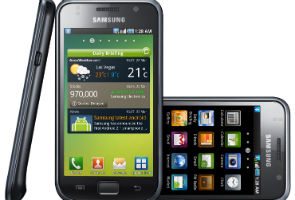
Samsung has announced an Android 2.3 Gingerbread update for the Galaxy S and Galaxy Tab devices. The update will also hit the lower end Galaxy devices like Ace, Gio, Fit and Mini.

The upgrade from Android 2.2 Froyo to Gingerbread offers greater performance including low CPU consumption and more powerful graphics. Users also get an upgraded user interface including enhanced copy and paste functionality. The Gingerbread update for the Galaxy S was expected in March but was delayed.

The upgrade will start with the Galaxy S in the UK and Nordic countries from mid-May and will be gradually rolled out to other North America and Asian markets in accordance with their regional plans.

The update will not be an over the air update and will only be available through Samsung's Kies air software

Google sends local news to smartphones

Google on Friday began letting US smartphone users stay abreast of local news whereever they happen to be.

"News near you" lets iPhones or Android-powered smartphones display stories relevant to people's locations at any given moment, according to product manager Navneet Singh.

Google News first made location-based service available about three years ago.

The new featue enables people to tap into location-sensing capabilities of smartphones to customize what headlines are displayed on homepages of devices.

"Google News for mobile lets you keep up with the latest news, wherever you are," Singh said.

He said the new feature "surfaces news relevant to the city you're in and surrounding areas" once smartphone users have given permission for the software to access location information on devices.

Now, a foldable smartphone screen

Mobile phone manufacturers have unsuccessfully tried to make smaller devices with bigger screen displays. But the sheer impossibility of creating a seamless screen nixed the idea of a folding phone. Till now.

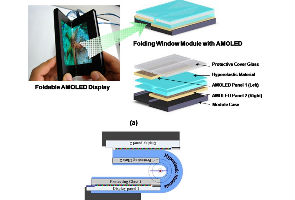
Researchers at Samsung Advanced Institute of Technology, South Korea, have built a prototype of a seamless foldable display that opens up to look like that of a regular smartphone.

The display consists of two active matrix organic light-emitting-diode (AMOLED) panels covered by a silicone window that prevents scratches and can serve as a touchscreen, the Daily Mail reports.

When folded down, they are separated by a gap of just one millimetre. But when the screen is opened, one panel lies almost completely on top of the other and appears seamless.

The researchers tested the foldable display's durability by performing 100,000 folding-unfolding cycles. They said the key to success was controlling the optical properties of the materials.

"All the materials in a foldable window unit (glasses and silicone rubber) must have almost the same optical properties and attach to each other strongly without any optical property change," Samsung's HongShik Shim said.

This new type of technology has not so far taken off because of the high manufacturing costs.

However, determined to compete with innovative design such as the iPad, a number of major manufacturers are determined to expand research and develop innovative new products with folding screens.

Samsung hopes that its large-screen devices will soon be available with AMOLED technology.