Tuesday, May 31, 2011

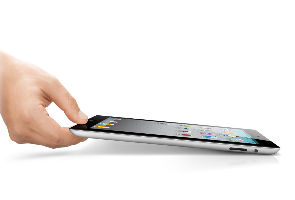
Taiwan show to feature Apple tablet challengers

Computer manufacturers of all sizes and descriptions have been pushing to get a piece of the ever-expanding tablet market created by the launch of Apple's iPad in April 2010.

The obsession with tablet computing will be on full display tomorrow as Computex, the world's second-largest computer show, begins its annual five-day run in Taipei.

The prominence of tablets underscores a dramatic shift under way in the personal computer industry and keenly felt in Taiwan, which is home to some of the world's biggest PC manufacturers as many consumers opt to buy a tablet rather than a new PC.

Computex will feature more than 50 tablet models, said organiser Taipei Computer Association, with big names including Lenovo Group Ltd and Toshiba Corp having their products displayed.

Researchers have predicted slower growth in PC sales this year because of the rising consumer interest in tablets.

Gartner Research recently cut its sales growth forecast for global PC sales in 2011 from 15.9 per cent to 10.5 per cent.

According to IHS iSuppli, world PC shipments declined 0.3 per cent year-on-year to 8.1 million units in the first quarter of 2011, with sales by No 3-ranked Acer plunging 20 per cent.

Many analysts say it may take two or three years before mobile device software from Google Inc. and Microsoft Corp can catch up with iPads, which have thousands of applications for consumers to choose from.

That may mean a hard time for many PC makers in the short term.

Research company IDC says Apple Inc had a 73 per cent share of the tablet market in the last quarter of 2010.

South Korea's Samsung Electronics Co was a distant second with 17 per cent.

It said 2010 tablet sales totalled 18 million units. IDC expects Apple to account for 70-80 percent of 2011 tablet sales that it predicts will reach 50 million units.

Besides tablets, Computex will also feature corporate and home servers and other cloud-based computing equipment and services, a sector Taiwanese firms have recently entered to make up for shortfalls in PC sales.

The world's top contract laptop manufacturer, Taiwan-based Quanta Computer Co, is among those producing servers for global firms such as Google.

Cloud computing involves running applications in web browsers.

The cloud allows users to store and retrieve data over the Internet whenever it is needed, instead of saving it on their own computers.

Sunday, May 29, 2011

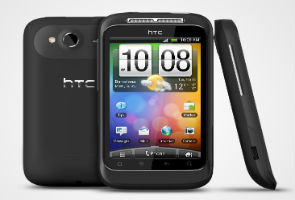
HTC Wildfire S hits Indian shores

HTC today announced the launch of their Wildfire S smartphone in India. Wildfire S is a low-cost Android device and is priced at Rs. 14,700.

It features Android 2.3.3 Gingerbread and is one of the cheapest devices to sport the latest incarnation of Google's mobile operating system. It also features a 3.2-inch HVGA display and 5-megapixel autofocus camera. It is powered by a 600 Mhz processor and it is 12.4 mm thick.

It also features the new HTC Sense user interface with a variety of enhancements. With a newly created camera experience, people can record HD videos or capture and edit images with a variety of camera effects. With HTC Locations, a new differentiated online mapping experience, people have instant, on-demand mapping without download delays or incurring mobile roaming charges.

Google faces lawsuit over mobile phone 'Wallet'

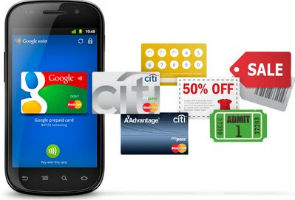
Google faced a lawsuit today after it unveiled a free mobile application that turns a smartphone into an electronic wallet and is designed to replace plastic credit cards.

PayPal and eBay filed a lawsuit in a California state court yesterday charging that the Internet giant tapped into trade secrets for its newly released Google Wallet. Google did not immediately respond to the allegations.

PayPal spent three years trying to work out a deal in which it would handle payments for Android smartphones, only to see Google scuttle the talks and hire its lead negotiator Osama Bedier, according to court documents.

Bedier worked at the eBay-owned online financial services unit as a vice president of platform, mobile, and new ventures until being hired in January by Google.

He played a central role at Google's official unveiling in New York with financial partners Citibank, MasterCard and First Data and telecom ally Sprint, saying Google Wallet is being field tested and will be available this summer.

Google Wallet will initially work with Google's Nexus S 4G smartphone from Sprint, the third-largest US wireless provider, and will eventually be expanded to other phones equipped with near field communication (NFC) technology.

An NFC chip in a phone allows a user who has entered his or her credit card details to "tap-and-pay" for purchases at a checkout register equipped with the PayPass system from Citi MasterCard.

iPhone 4 launches in India

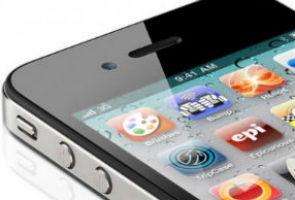
Aircel and Airtel have today launched the iPhone 4 in India. Both the companies held grand events at midnight across the country to announce the arrival of the much awaited smart phone in India. While the iPhone 4 was launched close to a year back in the US, it has just made its debut in India.

A new pricing structure will be in place for the device to cater to both the prepaid and post paid customers. The new pricing model allows customers to recover the upfront cost of their iPhone on select plans over the course of 24 months, making iPhone in India more affordable than ever.

The service providers will provide customers with a range of flexible service plans for both post-paid and pre-paid mobile customers.
Following an upfront payment of Rs. 34,500 for the 16GB model and Rs. 40,900 for the 32GB model, customers will have the opportunity to recover 100 percent of their upfront iPhone cost in monthly credits on their service plan over a period of 24 months.

Powered by Apple's A4, the iPhone 4 boasts of a retina display, FaceTime for video chat, 5MP rear facing camera with LED flash and HD video recording. Apple's App Store provides access to more than 350,000 apps.

"We are very proud to bring iPhone 4 to Aircel customers in India," said Mr. Sandip Das, Director, Aircel.  "We always endeavour to bring to our consumers a world class experience and offer the best in innovation and service. With a robust roll out of Aircel 's 3G services in 13 circles across India, the launch of iPhone 4 will allow our consumers to truly savour the 3G experience. With our incredible new price plans, we aim to make iPhone more affordable than ever."

Google tries to replace wallets with smartphones

Google Inc. is trying to nudge consumers and merchants into a world where the smartphone has replaced the wallet as the container for credit cards, coupons and receipts.

In Google's vision detailed Thursday, shoppers will touch their phone screen to select a card, then tap the phone to a credit-card reader in a store or restaurant. Google would make money by selling coupons and advertising that come along with the experience.

It's a goal shared by others. The Internet search and advertising company faces tough competition from cellphone companies, payment card issuer Visa Inc., eBay Inc.'s PayPal payment service and others. All of them want to play the central role of tying together phones, retailers and banks into a new payment system.

This isn't Google's first attempt at electronic payments. The company, based in Mountain View, Calif., introduced an online payment service called "Checkout" five years ago. It hasn't posed a serious threat to PayPal.

Google views its digital wallet as a way to sell advertising at a pivotal moment: when shoppers are in stores, ready to spend money and even more receptive to coupons and other discount offers.

Nick Holland, an analyst at Yankee Group, said that although all parties stand to benefit from Google's system, Google itself has the most to gain. That's because the Google Wallet would allow the company to "own" the market for advertising that's tied to the user's location.

Google said it's launching a Google Wallet trial in San Francisco and New York in cooperation with Visa rival MasterCard and Citibank. It will open up the system to consumers later in the summer. It then plans to expand across the country.

There has been talk of smart payment systems for years, and Google faces the same hurdles that have stifled previous trials.

One is that Google Wallet will initially work on only one smartphone, the Google Nexus S 4G carried by Sprint Nextel Corp. Several smartphone makers, including Research In Motion Ltd., maker of the BlackBerry, are ready to bring out more phones with chips for so-called Near-Field Communications, or NFC, but it's uncertain if they'll work with Google's system.

Another hurdle is getting retailers to invest in terminals that can talk to the phones. Google Wallet will connect only to MasterCard PayPass terminals. There are more than 135,000 of those in U.S. stores and restaurants, but that's only a small fraction of the total number.

Google's carrot is that retailers will be able to put loyalty cards and coupons in the Wallet, helping them track and engage with their customers. Partners in the trial include Macy's, RadioShack, Subway, Toys R Us, Duane Reade and Walgreens.
Yet another problem: Google needs to get cellphone companies on board. Its partner Sprint is the country's third-largest. AT&T Inc.,
Verizon Wireless and T-Mobile USA, the rest of the four biggest national carriers, have formed their own consortium to create a wallet that will compete with Google's.

The final obstacle is persuading consumers to take the leap. Phones might one day offer slightly faster checkouts, but the benefit would be small. Google calls Wallet a "single-tap solution," but in a demonstration at Thursday at Google's New York office, a Google executive had to tap his phone twice to a terminal provided by retail partner American Eagle Outfitters Inc., then sign on the screen to get a purchase of a pair of denim shorts through.

Osama Bedier, Google's vice president of payments, said it was up to the retailer to decide if the shopper has to sign on the screen.

"Consumers and businesses don't have a compelling need for changes in payment methods," a recent study by the Federal Reserve said.
It nevertheless concluded that there are substantial benefits to reap for everyone involved if mobile payments become a reality.

One of the potential benefits is increased security compared to cards with magnetic stripes, which can be copied surreptitiously.

The Wallet will initially work with a MasterCard from Citigroup Inc. and with a prepaid debit card issued by Google, but the intent is to let the wallet accept any card.

"This is about creating a compelling model and asking folks to join," Bedier said.

Banks and payment processors such as MasterCard and Visa like the idea of mobile payments, but have their own designs on the space.

Visa already has announced plans for its own wallet. MasterCard is collaborating with Google but is working on its own projects.

"Today's announcement is another early salvo in what will be a long and hard-fought battle to change consumers' payment behaviour and, as a potential result, the makeup of the payments landscape," said Forrester Research analyst Charles Golvin.

Micromax launches the Bling-2

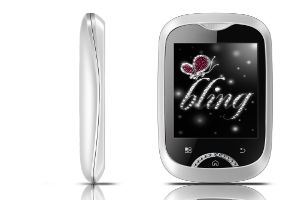
Fashionista alert: Micromax has launched the Bling-2, which has been specially designed for style savvy women.

The Bling-2 is powered by the Android 2.2 Froyo operating system and features a glossy frame made with Swarovski Zirconia. The device will come with a white leather carry case enclosed with a compact mirror and special pouch for lipstick. It will be priced at Rs. 8,999.

The device will come loaded with a 3.0 MP cameras with the lens framed in Swaroski Zirconia. As far as memory goes the device will support up-to 32GB microSD storage.

The phone will come with interactive apps like MiRoamer-Mobile radio, Saavn-Music on Demand, Mosho-Mobile shopping, Mundu Live TV (1 month free trial) and Whatsapp messenger. The Micromax app store will also make an appearance.

Additionally the device will boast of a 7.1 cm display, a capacitive screen, GPS and Mi-Fi pocket wireless internet feature. The phone will work on both 2G and 3G networks with GSM (850/900/1800/1900MHz) and WCDMA (2100 MHz) technology.

The phone comes with 3.0 MP camera and the lens is framed in Swaroski Zirconia. The memory of the phone is expandable up to 32GB with micro SD card.

Previously Micromax had launched the highly successful Bling which was also aimed at women and boasted of fashion centric features.

Nokia announces the X1-01 and C2-00 dual-SIM phones

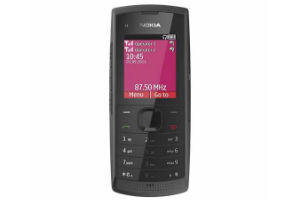
Nokia is expanding their Dual SIM portfolio with the launch of the Nokia X1-01 and C2-00. Both devices boast of great battery life - up to 43 days standby time and 13 hours talk time on the Nokia X1-01 - or 36 hours if you choose to play music. The Nokia C2-00 on the other hand offers a 19 days standby time with 5.75 hours talk time.

The Nokia X1-01 claims to possess one of the loudest speakerphones in the business. This claim will be put to the test as we have seen a large array of budget phones with this feature. The device offers storage support for up to 16GB using an SD card slot. It also offers an FM radio and an MP3 player.

A unique feature - the device can remember the settings for up to five separate SIM cards and you can give each SIM its own logo, music signature or ringtone. Sounds pretty cool, right?

The Nokia C2-00, on the other hand, offers easy swap of SIM cards. One SIM card is stored internally, like a traditional phone. The second card is easily accessible through a slot in the side so you don't have to open or even switch the phone off to change SIMs.

The Nokia X1-01 runs the Series 30 operating system, the Nokia C2-00 runs Series 40. The Nokia C2-00 has a VGA camera and supports up to 32GB of storage via an SD card.

Nokia plans to launch the devices in select markets and we do hope India is one of them. The X1-01 will cost �34 (Rs. 2,180 approx) while the C2-00 will cost �45 (Rs. 2,900 approx.)