Tuesday, September 27, 2011

Samsung starts new chip line to boost flash memory

Samsung Electronics, the world's largest memory chip maker, said Thursday it has begun mass production at a new line to raise production of flash memory chips used in tablets and smartphones.

The South Korean firm also announced it has started mass production of advanced DRAM (dynamic random access memory) chips, which use 20-nanometer process technology.

It said in a statement these offer significant improvements in productivity and cut energy consumption.

The flash memory chip market is robust thanks to growing demand for mobile devices such as tablet computers and smartphones.

But demand is weak for DRAM chips used in personal computers, pushing prices down and giving makers an incentive to adopt more advanced technology.

"The global semiconductor industry is in a period of fierce cyclical volatility," said chairman Lee Kun-Hee in a ceremony at the new plant at Hwaseong south of Seoul.

"We must prepare for an intensifying storm in the semiconductor industry by further enhancing our technological capabilities and expertise in order to maintain our leadership position."

Samsung said it has invested 12 trillion won ($10.4 billion) in building the new plant since work started in May last year.

Samsung had a market share of 41.6 percent in the global DRAM market in the second quarter, according to research firm IHS iSuppli.

Its share of the world market for NAND flash chips was also 41.6 per cent in the second quarter, ahead of Toshiba's 28.7 percent.

The company said it would raise production of NAND flash chips to meet growing demand, and would begin production of more advanced flash chips using 10-nanometer process technology next year.

"The latest technology migration by Samsung means a wider technology gap with its rivals in Taiwan and they may even exit the market sometime early next year," Kiwoom Securities analyst Lee Jae-Yun told Dow Jones Newswires.

"Demand for NAND chips will remain healthy due to brisk sales of smartphones and tablets, while supply has significantly shrunk due to production cuts by some chipmakers."


Next iPhone to be unveiled on October 4th?

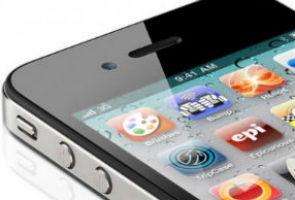
Apple's CEO Tim Cook might unveil the iPhone 5 on October 4, reports All Things Digital. Rumour mills have been hard at work these past few months suggesting the launch of the device towards the end of 2011.

As has been the tradition with all Apple products, the iPhone 5 is expected to hit store shelves shortly after its announcement.

As Jobs' former right hand man and current CEO of the company, Tim Cook is expected to play a significant role in the announcement of the device.

What remains to be seen is whether Steve Jobs himself will be present at the announcement. During his indefinite medical leave, Jobs still found the time to come on stage to unveil the iPad 2.

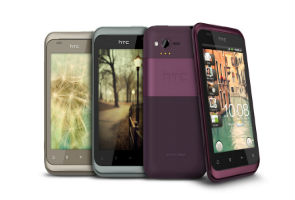
HTC unveils new smartphone, the Rhyme

Taiwan's HTC unveiled a smartphone called the Rhyme on Tuesday which features a blinking "charm" that attaches to a bag to let a user know if they have received a call or a message.

The Android-powered Rhyme will go on sale in the United States on September 29. It will cost $199 and will be available through Verizon Wireless.

The Rhyme, which runs the latest version of Google's Android software known as Gingerbread, will go on sale in Europe and Asia in October.

Taiwan's leading smartphone maker stressed the "style" and accessories for the plum-colored device at a launch event in Manhattan on Tuesday.

"Like your glasses, your wallet, your belt or that special bag, the smartphone or the phone expresses who you are as an individual," said HTC's vice president of design, Scott Croyle.

"You want a phone that's handcrafted with style, you want it to be intuitive, you want it to be less than a device and more of a companion," Croyle said.

The Rhyme comes with a tethered accessory called a "charm" that blinks when a user receives a message or a call. "It's more respectful than a ring and more noticeable than vibrate," HTC said.

Tuesday, September 6, 2011

Many US schools adding iPads, trimming textbooks

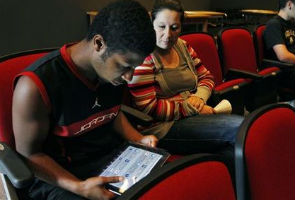
For incoming freshmen at western Connecticut's suburban Brookfield High School, hefting a backpack weighed down with textbooks is about to give way to tapping out notes and flipping electronic pages on a glossy iPad tablet computer.

A few hours away, every student at Burlington High School near Boston will also start the year with new school-issued iPads, each loaded with electronic textbooks and other online resources in place of traditional bulky texts.

While iPads have rocketed to popularity on many college campuses since Apple Inc. introduced the device in spring 2010, many public secondary schools this fall will move away from textbooks in favor of the lightweight tablet computers.

Apple officials say they know of more than 600 districts that have launched what are called "one-to-one" programs, in which at least one classroom of students is getting iPads for each student to use throughout the school day.

Nearly two-thirds of them have begun since July, according to Apple.

New programs are being announced on a regular basis, too. As recently as Wednesday, Kentucky's education commissioner and the superintendent of schools in Woodford County, Ky., said that Woodford County High will become the state's first public high school to give each of its 1,250 students an iPad.

At Burlington High in suburban Boston, principal Patrick Larkin calls the $500 iPads a better long-term investment than textbooks, though he said the school will still use traditional texts in some courses if suitable electronic programs aren't yet available.

"I don't want to generalize because I don't want to insult people who are working hard to make those resources," Larkin said of textbooks, "but they're pretty much outdated the minute they're printed and certainly by the time they're delivered. The bottom line is that the iPads will give our kids a chance to use much more relevant materials."

The trend has not been limited to wealthy suburban districts. New York City, Chicago and many other urban districts also are buying large numbers of iPads.

The iPads generally cost districts between $500 and $600, depending on what accessories and service plans are purchased.

By comparison, Brookfield High in Connecticut estimates it spends at least that much yearly on every student's textbooks, not including graphing calculators, dictionaries and other accessories they can get on the iPads.

Educators say the sleek, flat tablet computers offer a variety of benefits.

They include interactive programs to demonstrate problem-solving in math, scratchpad features for note-taking and bookmarking, the ability to immediately send quizzes and homework to teachers, and the chance to view videos or tutorials on everything from important historical events to learning foreign languages.

They're especially popular in special education services, for children with autism spectrum disorders and learning disabilities, and for those who learn best when something is explained with visual images, not just through talking.

Some advocates also say the interactive nature of learning on an iPad comes naturally to many of today's students, who've grown up with electronic devices as part of their everyday world.

But for all of the excitement surrounding the growth of iPads in public secondary schools, some experts watching the trend warn that the districts need to ensure they can support the wireless infrastructure, repairs and other costs that accompany a switch to such a tech-heavy approach.

And even with the most modern device in hand, students still need the basics of a solid curriculum and skilled teachers.

"There's a saying that the music is not in the piano and, in the same way, the learning is not in the device," said Mark Warschauer, an education and informatics professor at the University of California-Irvine whose specialties include research on the intersection of technology and education.

"I don't want to oversell these things or present the idea that these devices are miraculous, but they have some benefits and that's why so many people outside of schools are using them so much," he said.

One such iPad devotee is 15-year-old Christian Woods, who starts his sophomore year at Burlington, Mass., High School on a special student support team to help about 1,000 other teens adjust to their new tablets.

"I think people will like it. I really don't know anybody in high school that wouldn't want to get an iPad," he said. "We're always using technology at home, then when you're at school it's textbooks, so it's a good way to put all of that together."

Districts are varied in their policies on how they police students' use.

Many have filtering programs to keep students off websites that have not been pre-approved, and some require the students to turn in the iPads during vacation breaks and at the end of the school year. Others hold the reins a little more loosely.

"If we truly consider this a learning device, we don't want to take it away and say, `Leaning stops in the summertime.' " said Larkin, the Burlington principal.

And the nation's domestic textbook publishing industry, accounting for $5.5 billion in yearly sales to secondary schools, is taking notice of the trend with its own shift in a competitive race toward developing curriculum specifically for iPads.

At Boston-based Houghton Mifflin Harcourt, for instance, programmers scrambled to create an iPad-specific secondary school program starting almost as soon as Apple unveiled the tablet in spring 2010.

The publisher's HMH Fuse algebra program, which became available at the start of the 2010 school year, was among the first and is a top seller to districts. Another algebra program and a geometry offering are coming out now.

The HMH Fuse online app is free and gives users an idea of how it works, and the content can be downloaded for $60. By comparison, the publisher's 950-page algebra text on which it was based is almost $73 per copy, and doesn't include the graphing calculators, interactive videos and other features.

For a school that would buy 300 of the textbooks for its freshman class, for instance, the savings from using the online version would be almost $4,000.

Jay Diskey, executive director of the Association of American Publishers' schools division, said all of the major textbook publishers are moving toward electronic offerings, but at least in the short term, traditional bound textbooks are here to stay.

"I think one of the real key questions that will be answered over the next several years is what sort of things work best in print for students and what sort of things work best digitally," Diskey said. "I think we're on the cusp of a whole new area of research and comprehension about what digital learning means."

Sony to release tablet computer this month

Sony's first tablet computer will hit the Japanese market on September 17 as the company looks to take on Apple's popular iPad, the electronics giant said on Thursday.

The Sony Tablet will be powered by Google's Android software, allowing users to download content such as books, movies and games.

The Sony Tablet "S" series with a 9.4-inch (23.8 centimetre) touchscreen display is expected to have a price tag of 45,000 yen ($580) for a 16-gigabyte data storage model and 53,000 yen for the 32-gigabyte version.

The product will also become available in US and European markets later this month, with a price tag of $499 and 479 euros for the 16-gigabyte model.

Competitors have rushed to cash in on soaring demand for tablets since the iPad was released in April last year, but Sony's devices will arrive well behind those of its rivals.

The devices will have access to Sony's cloud of online content such as movies, music, digital books, PlayStation games and other entertainment.

Sony has focused more on pushing its content such as games and music through hardware platforms including game consoles, smartphones and tablet computers.

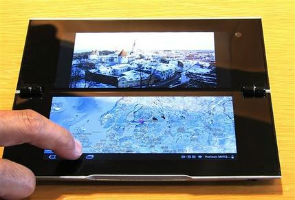
It will release the dual-screened "P" series with a folding design, incorporating two 5.5-inch screens in Japan between October and November. The series will be launched in November in Europe and sometime later this year in the United States.

"Sony aims to grab the No. 1 share of the growing Android-based tablet market (in Japan) in fiscal 2012 (ending March 2013)," Kyodo News quoted Akihiro Matsubara, corporate vice president of Sony Marketing Inc, as saying.

Sony shares rose 1.98 percent to 1,698 yen in Tokyo trade on Thursday.

ew iPhone avatar lost in a bar: CNET

Technology news website CNET on Wednesday reported that a new version of Apple's coveted iPhone went astray in a bar in a replay of an embarrassing loss that took place last year.

An Apple employee lost a yet-to-be released iPhone model in a tequila bar in the San Francisco Mission District in July, according to CNET.

Apple electronically tracked the device to a San Francisco home but the resident denied knowing anything about the missing iPhone, which may have been sold for a couple of hundred dollars at online auction house eBay, CNET said.

The report prompted speculation whether the missing iPhone was a next-generation expected to be unveiled by Apple in September or October.

Word of another unreleased iPhone model disappearing in a bar came just weeks after prosecutors decided not to pursue criminal charges against Gizmodo technology bloggers who got hold of a lost iPhone 4 prototype last year.

Criminal charges were filed against a man who purportedly found the iPhone 4 prototype in a bar and another who brokered a deal to sell it to Gizmodo, according to the district attorney's office in San Mateo County, California.

Early last year, Gizmodo published pictures and details of the iPhone prototype after buying it for $5,000 from a man who claimed to have found it in a beer garden where it was lost by an Apple software engineer.

Sony tablets aim to stand out from the crowd

Sony Corp. on Wednesday revealed its first two tablet computers, with some features that aim to set them apart from the herd of iPad competitors.

The Tablet S, which is about the size of an iPad, can double as a universal remote control. The tablet is wedge-shaped, with one side thicker than the other. The shape mimics that of a magazine that's been folded over.

The Tablet P is small enough to fit in a purse and opens like a book to reveal two screens. When used for e-book reading, it can be held vertically and show one page on each screen. When composing email, the upper screen can show the message while the lower one shows a keyboard.

The Tablet P will be compatible with AT&T's cellular broadband network. It will go sale later this year at a price yet to be determined.

Sony said the Tablet S is going on sale immediately for $499 or $599, depending on how much memory is included.

The tablets tie into other Sony properties. For instance, they will be able to run games created for the original PlayStation and the PlayStation Portable. They'll also have apps that connect to Sony's Music Unlimited and Video Unlimited content stores, formerly known as Qriocity.

Other electronics companies are trying to differentiate their tablets from the iPad as well. On Tuesday, Lenovo Corp. launched a "business-oriented" tablet that comes with a stylus.